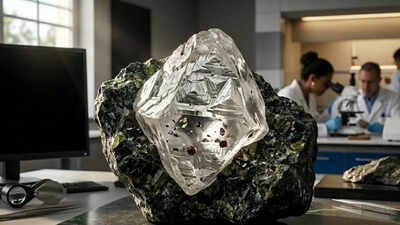
Scientists finally reveal where the world’s most valuable diamonds are born |

A groundbreaking study by the Kimberlite Research Group at the University of Cape Town has pinpointed where the world’s most precious diamonds originate. Standard diamonds form within Earth’s lithospheric plates. However, ‘CLIPPIR’ gems – those similar to Cullinan diamonds in size and purity – emerge from much greater depths. As noted in China.org, Associate Professor…

Read More

In 1938, Roy Plunkett found a frozen gas cylinder and discovered Teflon, changing everything from space suits to frying pans |

A chemist’s accidental discovery in 1938 led to the creation of Teflon. This material, initially a secret industrial substance, later revolutionized cookware with non-stick frying pans. While offering convenience, its environmental impact is now a concern. The invention highlights how curiosity can transform unexpected outcomes into global successes, impacting everything from satellites to everyday kitchenware….

Read More

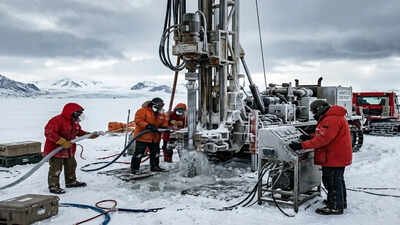
What scientists found beneath Antarctica’s ice after drilling over 1,700 feet down |

Scientists drilled 1,700 feet into Antarctic ice to redefine sea level predictions. Image credit – Gemini Scientists have obtained the deepest sediment core ever recovered from under the Antarctic ice, providing insight into climate changes on Earth millions of years ago. The sediment core, discovered beneath Crary Ice Rise, is about 748 feet deep and…

Read More

Quote of the day by Pythagoras: “The oldest, shortest words— ‘yes’ and ‘no’— are those which require the most thought.” |

Pythagoras (Image: Wikipedia) Some quotes are easy to understand right away. They use simple words that sound familiar, but you remember them for a long time. One of them is this quote from Pythagoras. It seems like there are only two very simple words: “yes” and “no.” When people talk, make choices, and answer questions,…

Read More

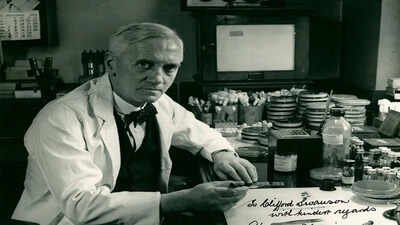
In 1928, Alexander Fleming noticed a strange mould on a petri dish, and this observation launched the antibiotic era |

What discovery led to penicillin and modern antibiotics. Image credit – Wikimedia One of the most significant discoveries in the field of medicine was achieved in 1928 by Alexander Fleming. It was not the result of an intentionally conducted experiment but happened accidentally during Fleming’s work in his laboratory in St. Mary’s Hospital, London.Fleming noticed…

Read More

Stanford’s tiny chip could make your internet 100x faster while using less power |

Stanford University researchers came up with an innovative optical amplifier about the size of a fingertip. This tiny device could change high-speed data communications by cutting down on energy use significantly. Traditional amplifiers tend to be large and consume a lot of power, but this new chip is different. It features a ‘racetrack-shaped’ resonator that…

Read More

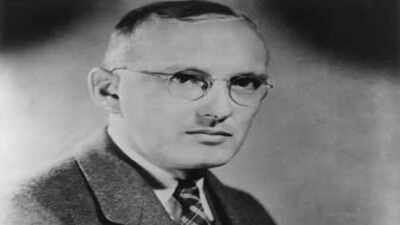
In 1933, Bell Labs engineer Karl Jansky followed a faint radio hiss, and this discovery opened the door to radio astronomy |

Karl Jansky tracked radio static with a rotating antenna. Image credit – Wikimedia Simple engineering tasks often lead to massive discoveries. This was the case for the engineer Karl Jansky. He was employed at Bell Telephone Laboratories in New Jersey in 1933 to ascertain the source of radio interference affecting long-distance communication.As part of accomplishing…

Read More