NASA asteroids: No way to stop 15000 city-killing asteroids from striking Earth: NASA scientist warns |

NASA Warns: Thousands of City-Killing Asteroids Untracked, Earth Vulnerable In a stark and widely reported warning, NASA’s planetary defence chief has revealed that Earth currently has no reliable way to stop thousands of “city-killing” asteroids that could one day strike our planet, raising emergency concerns in the scientific community and beyond. These insights come from…

Read More

Mars in 30 days? Russian scientists are building a plasma engine that could slash travel time |

Mars in 30 days – Russian scientists are building a plasma engine that could slash travel time Long before any spacecraft can attempt a faster journey to Mars, scientists must first solve one of space exploration’s biggest challenges: propulsion. Chemical rockets, used to launch spacecraft into space from Earth, burn fuel quickly and produce a…

Read More

Can humans cause earthquakes and can they ever be prevented |

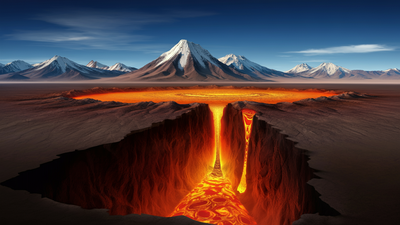
Can humans cause earthquakes and can they ever be prevented Earthquakes are usually linked to natural movements along faults deep inside the Earth, but in certain situations, human activity can also produce measurable seismic events. Scientists distinguish natural tectonic earthquakes and vibrations or quakes triggered by human actions such as mining, reservoir filling, or the…

Read More

Asteroids vs Comets vs Meteors: What is the difference between asteroids, comets, and meteors |

What is the difference between asteroids, comets, and meteors Space around the Sun contains far more than planets. Scattered through it are smaller bodies made of rock, metal, ice and dust. These objects move on their own paths, sometimes quietly beyond Jupiter, sometimes crossing close to Earth. The terms ‘asteroid’, ‘comet’ and ‘meteor’ are often…

Read More

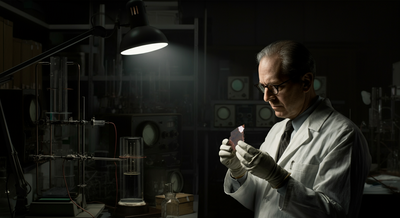
Scientists warn melting ice could release 5,000-year-old superbug that resists 10 modern antibiotics |

Psychrobacter SC65A.3 is a 5,000-year-old cold-adapted bacterium resistant to multiple modern antibiotics/ AI Illustration A team of Romanian researchers has identified a bacterium preserved for roughly 5,000 years inside an underground ice deposit that can already withstand multiple modern antibiotics. The organism, recovered from Scărișoara Ice Cave in north-west Romania, survived frozen conditions for millennia…

Read More