
NASA has tested a navigation system that lets satellites determine where they are without GPS by treating other spacecraft and debris as landmarks, while refining more than 200 object orbits in three days

Starling tested GPS-free navigation using onboard cameras to track space objects. (Credit: NASA) NASA has tested a navigation system that allows satellites to determine their position without relying on GPS. Instead of depending on an external navigation network, the system uses other spacecraft and orbital debris as reference points to work out where a satellite…
Read More

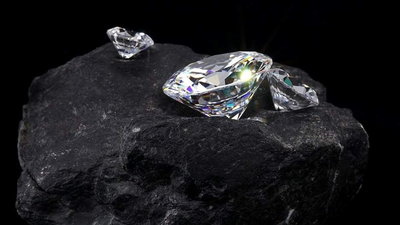
Scientists discovered what happens when diamond is hit at extreme speed, it can rapidly transform into graphite within microseconds |

Diamond is celebrated as one of the hardest materials known, but new research shows that even its famously rigid structure can be dramatically altered by an impact travelling at hypersonic speed. Scientists have found that diamond particles embedded in a specially engineered ceramic composite can undergo a near-complete transformation into graphite during a collision lasting…

Read More

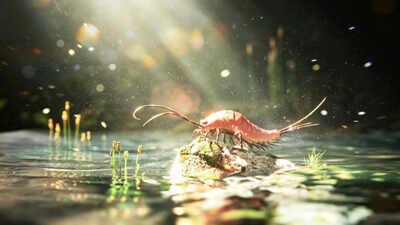
Insect Fossil Texas 324 Million Year: A 324-million-year-old fossil from Texas preserves an early insect with 24 legs and paddle-like limbs on its abdomen, suggesting insects did not leave water for land in one sudden evolutionary jump

Palaeoecological reconstruction of the Carboniferous stem-insect Chosha praecursor. (Image by NIGPAS) An international research team has identified a remarkable insect fossil from western Texas that could represent a crucial missing link in the story of insect evolution. The fossil, from the Late Mississippian period approximately 324 million years ago, belongs to a stem group of…

Read More

Viking Textile Fragments: Rare textile fragments have survived for around 1,300 years inside a Viking woman’s Danish grave because metallic salts released by two brooches inhibited microbes that would normally destroy the cloth

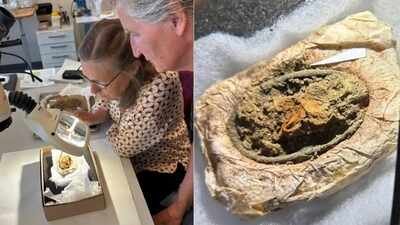
Credit: Arkæologi Vestjylland Danish archaeologists have unearthed rare textile remains from a Viking woman’s grave near Varde, in the heart of Western Jutland. During excavations at the Skonager site (ARV 661), a team of archaeologists discovered a Viking Age burial in which fragments of clothing survived against all odds. This discovery gives a rare glimpse…

Read More

In 2009, Minnesota treated Pickerel Lake with fish poison to remove common carp; afterward water clarity rose nearly 600% and plant cover climbed from 4.6% to 90%

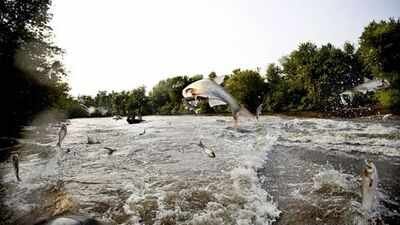
For decades, Pickerel Lake in Minnesota struggled with poor water quality, heavy algal growth and extremely low aquatic plant cover. The shallow lake had become dominated by common carp, a bottom-feeding fish that can disturb lake sediments and alter the movement of nutrients through an aquatic ecosystem.But after the invasive fish were removed in 2009,…

Read More

Researchers piecing together ancient tablets, inscriptions and a statue argue that three forgotten kings ruled Assyria more than 2,700 years ago, potentially changing part of the empire’s accepted chronology

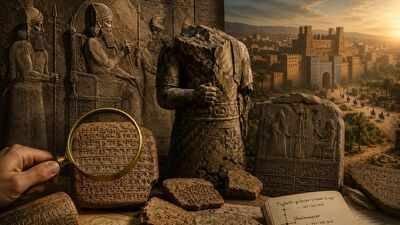
Representative Image (AI-generated) For more than 2,700 years, the story of Assyria’s kings has survived through fragments of clay tablets, royal inscriptions, monuments and carefully preserved lists of rulers. Together, these records have allowed historians to reconstruct the succession of one of the ancient Near East’s most powerful kingdoms. Yet ancient history is rarely as…

Read More

McDonald’s-backed grants worth $2.4 million are unlocking nearly $99.1 million for conservation deals covering more than 100,650 acres of working ranches across 11 US states

McDonald’s has approximately 13,500 restaurants in US, and while the brand serves a variety of menu options across the country, it also supports other causes. On August 27, 2026, the National Fish and Wildlife Foundation (NFWF) announced nearly $2.4 million in grants, supported by funding from McDonald’s USA and several of its suppliers. The initiative…

Read More

Scientists spent 100 years discovering new animals and found that hotspots are emerging in unexpected places; it is now reshaping the understanding of biodiversity

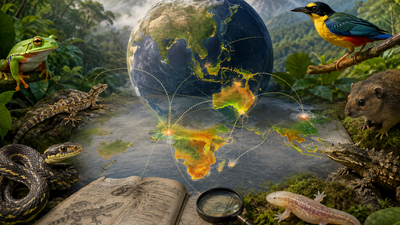
Representative Image (AI-generated) For much of the past century, scientists have steadily expanded the catalogue of life on Earth, adding species that were previously unknown to science and refining the ranges of those already documented. But what happens when those discoveries are added back into the maps scientists use to understand global biodiversity? A new…

Read More

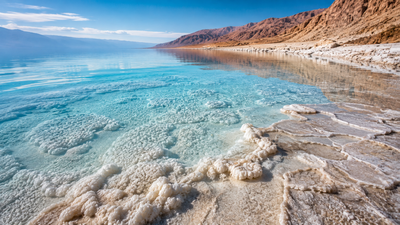
The Dead Sea has been building a salt floor for years. In 2019, scientists finally revealed a hidden process that keeps adding new salt every year. |

For years, the Dead Sea presented scientists with a genuine puzzle. Its upper waters, warmed by relentless sun and thickened by evaporation, seemed to shed salt each summer rather than accumulate it, while the lakebed far below kept gaining a fresh crust of crystals regardless of season. According to a 2016 study published in Limnology…

Read More

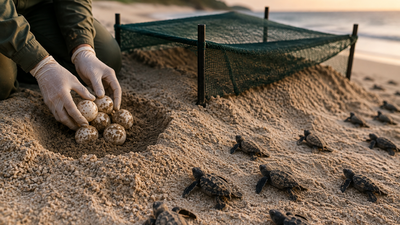
Conservationists move threatened sea turtle nests to safer sand to save eggs from heat and tides; a 2-year study found lower hatching success, smaller hatchlings and just 8% males in one season

Representative Image (AI-generated) As rising temperatures, flooding and erosion put sea turtle nests at greater risk, conservationists often step in to move vulnerable eggs to safer parts of the beach. The practice can prevent an entire clutch from being destroyed by high tides, extreme heat or other immediate threats. But a new two-year study suggests…

Read More