As universities face political scrutiny, Yale professors’ donations skew heavily Democratic
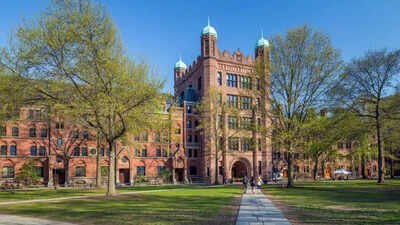
Nearly all political donations made by Yale professors in 2025 went to Democratic candidates and groups, according to an analysis of federal campaign finance data by the Yale Daily News.The newspaper reviewed more than 7,000 filings submitted to the Federal Election Commission in 2025 that listed Yale as the employer. Of 1,099 donations in which the donor’s occupation was listed as professor, 97.6% went to Democratic candidates or partisan Democratic groups. The remaining 2.4% went to independent candidates or political action committees. None went to Republicans.The data mirrors previous years and comes amid heightened political scrutiny of elite universities by the administration of President Donald Trump, which has cited ideological imbalance among faculty as one justification for proposed funding cuts and policy changes affecting higher education.
Data reflects broader criticism of universities
The donation pattern aligns with conservative criticism that university faculty do not reflect the political distribution of the broader population. That argument has been raised repeatedly in debates over federal research funding, university governance and endowment taxation.In December, the Buckley Institute released a report finding that more than 82% of examined Yale faculty members were registered Democrats or primarily supported Democratic candidates. Following the report, conservative media figures, including Elon Musk, criticised Yale for what they described as a lack of political diversity, according to Yale Daily News.Shortly afterwards, the University released an unsigned statement saying that faculty hiring and retention decisions are based on academic criteria rather than political views. When asked about the 2025 donation data, Dean of the Faculty of Arts and Sciences Steven Wilkinson referred Yale Daily News to that statement.
Faculty link donations to higher education policy
Several professors told Yale Daily News that the partisan tilt in donations reflects policy differences rather than ideological uniformity. They cited issues such as research funding, institutional autonomy, financial aid and recent federal tax changes affecting university endowments.Italian Studies lecturer Michael Farina said professors tend to support parties that back policies aligned with academic priorities. He pointed to the projected cost of the endowment tax increase, which Yale estimates will reduce its budget by roughly $300 million annually once implemented.Similar patterns were reported previously. In January 2024, Yale Daily News found that more than 98% of Yale professors’ donations in 2023 went to Democratic candidates or groups.
No Republican donations from professors
While 17 individuals who listed Yale as their employer donated to Republican candidates or groups in 2025, none identified their occupation as professor in Federal Election Commission filings reviewed by the newspaper.Some donations instead went to independent political action committees. According to the data, 7.5% of donations from Yale employees overall and 2.4% from professors went to independent candidates or nonpartisan advocacy groups.ActBlue, a Democratic fundraising platform, received the largest share of donations from Yale professors in 2025, totaling $23,266, Yale Daily News reports.
Debate over intellectual diversity
The donation data has renewed discussion about political diversity within academia. Carlos Eire, a history and religious studies professor who identifies as politically conservative, told Yale Daily News that faculty at Yale and other universities have leaned left for decades and that he does not expect the imbalance to change soon.University administrators have said that faculty political affiliation does not shape classroom instruction. Yale College Dean Pericles Lewis told Yale Daily News that most professors teach subjects in which political views are largely irrelevant and that even in politically adjacent fields, faculty aim to present multiple perspectives.Political science professor Steven Smith said there is little evidence that professors’ personal political donations influence teaching. He added that imposing political criteria in faculty hiring would not be an effective way to promote intellectual diversity.