Florida’s alligators create deep-water ponds during dry seasons; these predators help other animals survive |
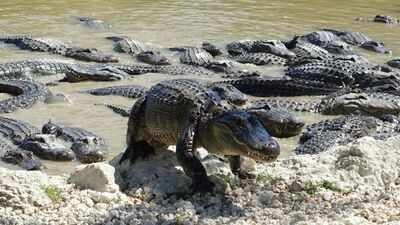
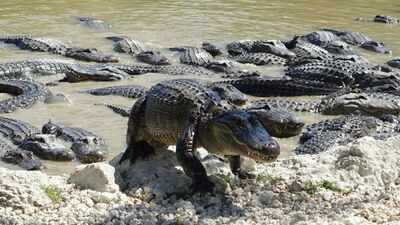
Seasonal drops in water levels trouble the Everglades in Florida, drying out the shallow marshes little by little. As the wetlands shrink there is less room and less places for fish and other aquatic creatures to go and more pressure to find water that still exists . American alligators dig and maintain deeper ponds which hold water as the surrounding marshes recede, thus alleviating these conditions. A 2025 study in the Journal of Animal Ecology shows how these habitats support aquatic communities and shape feeding relationships, emphasising the ecological role of a predator that also reshapes its environment.
How do Florida’s alligators create deep-water ponds during dry seasons
American alligators do more than hunt other animals in the Everglades. Through their activity, they remove vegetation and redistribute sediment, creating and maintaining deeper pools commonly known as alligator ponds or alligator holes. These water bodies provide a contrast to the surrounding shallow marshes, particularly when seasonal rainfall declines and water levels begin to fall.According to Peter J. Flood and colleagues in their study, alligator ponds are typically around one metre deeper than the neighbouring marsh. Their influence also extends beyond the open water, creating a surrounding ring of dense vegetation known as the near-pond habitat.Although these ponds cover less than one per cent of the landscape, their importance becomes especially clear during the dry season. The researchers explain that deeper water and channels maintained by alligators help aquatic animals move between habitats until the surrounding marsh becomes too dry.
These ponds are important refuges for aquatic life
As the water goes down , fish and other aquatic organisms are cut off from parts of the marsh that once provided living space and food . Deeper ponds offer places where they can remain as shallower areas become increasingly difficult to inhabit.The study used long-term fish monitoring data from two regions of the Everglades collected over a period of 1997-2022. Results showed that fish numbers increased substantially, in alligator ponds, as the dry season progressed. Average fish catch per unit of sampling effort rose from 1.5 in July to 17.8 in April, when dry-season conditions were strongest in the monitoring data.By comparison, fish numbers in marshes declined as water levels fell. This contrast supports the researchers’ findings that alligator ponds serve as important dry-season refuges, concentrating aquatic animals in the water that remains available.However, the benefit is not simply that more fish occupy a smaller area. The ponds also create habitats with different depths, vegetation and nutrient conditions, influencing the resources available to the animals living there.
The ponds reshape food supplies and feeding patterns
Flood and colleagues investigated how alligator-created habitats affect the wider food web, the network of feeding relationships linking organisms. Their research included stomach-content analysis of 1,677 individuals from 46 species and stable-isotope analysis of 3,978 samples representing 91 groups of organisms.Results indicated that aquatic consumers did not always consume the same prey in ponds as in surrounding marshes. The most abundant prey found in stomachs across habitats and seasons was zooplankton, small animals that drift or swim in the water. But the relative abundance of the different prey was different.For example, cladocerans, a group of small crustaceans, were more prominent in pond consumers than in marsh consumers in one of the studied wetland areas. The researchers also found that changes in diet occurred more frequently during the dry season, accounting for 73 per cent of the recorded dietary shifts.The study links these differences to variations in habitat and food availability. Alligator ponds have elevated nutrient levels compared with nearby marshes, potentially supporting greater availability of prey and affecting feeding relationships throughout the aquatic community.
How does habitat engineering affect competition and survival
When animals gather in the remaining water, they encounter a changing balance between food, competition and the risk of being eaten. The researchers found that alligator-created ponds altered the range of food resources used by different groups of aquatic consumers, although the direction of change depended on the type of animal and the method used to assess its diet.Stomach-content evidence generally suggested that some groups had a wider range of feeding options in dry-season ponds. This could indicate reduced competition for certain resources. However, stable-isotope evidence, which reflects feeding over several weeks rather than the previous day or two, often showed the opposite pattern.Flood and colleagues therefore caution against assuming that the ponds reduce competition in every situation. Their findings suggest that food availability, animal movement and predation all contribute to the changing relationships between species. The ponds can help aquatic animals persist through habitat loss, but they also bring prey and predators into closer proximity.
The benefits have limits as the dry season advances
Alligator ponds do not guarantee survival throughout the entire dry season. As more fish concentrate in limited water, predators gain greater access to prey. Water quality can also deteriorate, with low dissolved oxygen and increased nitrogenous waste creating additional stress.The study notes that previous research has documented increased mortality in alligator ponds late in the dry season. The researchers’ own sampling took place early enough that they did not record mortality caused by oxygen stress. They suggest that a point may eventually be reached when drying and predation become so intense that the benefits of these refuges decline.This distinction is important as the ponds are not removing the pressures that come with drought but are providing temporary relief. Their ecological value changes as conditions become more severe, and different groups of animals may experience different outcomes.
Alligators play a wider role in the Everglades ecosystem
The findings published by Flood and colleagues show that American alligators influence the Everglades through both predation and habitat creation. Their ponds preserve pockets of deeper water, attract aquatic animals and alter the distribution of food and feeding relationships across the wetland.The research supports the view that animals capable of modifying their surroundings can help maintain communities under environmental stress. But it’s a complicated relationship as the very habitats that provide refuge also increase exposure to predators and degrade water conditions.