25,000 crash victims treated under PM-RAHAT; hospitals reimbursed in 13,000 cases | India News
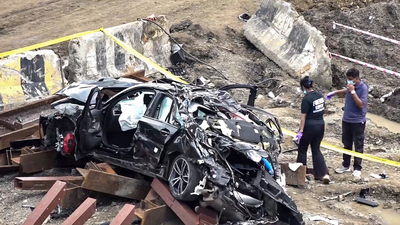
NEW DELHI: In the past eight months, nearly 25,000 road crash victims have been treated under PM-RAHAT, govt’s cashless scheme, and in nearly 13,000 cases, hospitals have been reimbursed for cost of treatment, a top road transport ministry official said Tuesday.Speaking at a roundtable on “Rethinking Urban Speed” organised by Road Safety Network, additional secretary in road transport ministry Mahmood Ahmed said that the scheme has helped save lives. The scheme under Motor Vehicles Act makes it mandatory for hospitals to treat road crash victims for free treatment up to Rs 1.5 lakh per victim, subject to a cap of seven days from the date of crash. Different studies suggest that 50% of lives can be saved by providing quick medical care to road crash victims.Mahmood highlighted the need to strengthen electronic enforcement of traffic rules considering that there is a tendency to break rules and deployment of manpower to detect this can never be sufficient. “Unless there is a certainty of punishment, the deterrence will never come,” he said. The official said the system would work only if violations were detected and followed through.Experts and govt officials at the workshop observed that India’s growing vehicle-safety capabilities cannot substitute for controlling speeds on urban roads, where pedestrians, two-wheeler riders and cyclists remain exposed to crash and their severity is directly linked to speedChairman of newly set up National Road Safety Board (NSRB), Nitin Gokarn, said the nature of Indian urban roads compounds the problem as different users, including pedestrians, two-wheelers, cars, trucks, and others use the same space. It’s worse in congested areas where pedestrians have no option left than walking on the main road because pedestrian facilities are absent. What adds to their risk are wrong-side driving, inadequate medians and poorly lit road infrastructure.
Share your thoughts in the comments
Be respectful · TOI community guidelines
Gokarn said at times when segregation of vulnerable road users is not possible, there are cars and bikes on roads that can reach speeds of 240 kmph and 100 kmph. This makes them vulnerable and more so when the speed is higher, he said.Experts, at the meet, shared examples such as Paris which has a maximum speed of 30 kmph or less on 89% of its urban road network; Brussels-Capital Region has 86%. They added that speed management in Indian cities needs to move beyond the setting of speed limits and focus on the interaction between road design, enforcement, local conditions and the behaviour of road users.Prof Bhargab Maitra of IIT, Kharagpur said that speed management provides an immediate opportunity to improve road safety. “Speed management is doable, implementable and workable in the short term. It is not merely about reducing speed limits; it requires the right combination of engineering, enforcement and context-based speed regulation. Aligning road design, speed limits and operating speeds, while prioritising pedestrians, cyclists and two-wheeler users, can help make our urban roads safer and more inclusive,” he said.