Wild honeybee populations in Europe could decline by 56% in 10 years without swarms from managed hives; study finds |
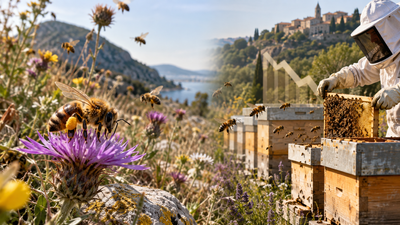
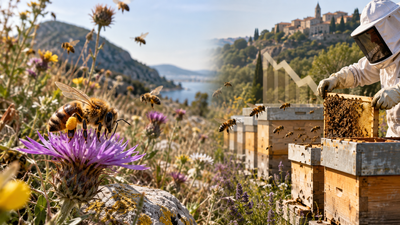
Europe’s wild honeybees are facing growing conservation concerns after new research found that their numbers could fall by a median of 56% over 10 years without new swarms from managed hives. According to the study published in the journal Conservation Science and Practice, titled ‘The wild honeybee population of Europe is in decline: Evidence from monitoring studies’, it examined wild honeybee populations in seven European countries and found that their prospects differ sharply from one region to another. While some populations are projected to decline substantially, southeast England showed the potential for strong growth. Overall, the researchers propose that Europe’s wild honeybee subpopulation be considered ‘Endangered in the wild’ under IUCN criteria. This is the authors’ own assessment, not an official Red List listing.
Wild honeybee colonies rely on swarms from managed hives
The line between wild and managed honeybees is not as clear as it might seem. Managed colonies can leave apiaries as swarms and settle in natural cavities, while wild colonies can also be taken into beekeeping. Queens and drones mate while flying freely, allowing genetic exchange between the two groups. For this reason, the researchers treat managed and wild colonies as parts of the same biological population rather than as completely separate kinds of honeybee.That movement between the two groups also makes it difficult to determine whether wild colonies can maintain themselves without outside additions. The researchers point to observations from German forests, where honeybees occupied around 10% of trees containing black woodpecker cavities during summer. Yet when individual colonies were followed over time, few survived until the following spring. The researchers concluded that the seemingly stable summer population could be explained by large numbers of swarms arriving from nearby apiaries.
Europe’s wild honeybees face sharp declines
The researchers based their analysis on nine monitoring studies covering 700 nesting sites in seven European countries. The studies were carried out between 2013 and 2025, with monitoring periods lasting between two and seven years. Since the number of swarms produced by wild colonies is difficult to measure in the field, the researchers used an assumed average of two swarms per colony each year. They combined this assumption with observed colony survival rates to project how wild populations could change over 10 years without immigration.The projections differed markedly across Europe. Wild honeybee populations in Germany and Switzerland were highly likely to disappear within 10 years in the simulations if no new swarms arrived. Spain showed a projected decline of 78% per decade, while Poland was projected to fall by 56%. The projected declines were 41% in Luxembourg and 37% in France. Southeast England stood apart from these regions, with a projected population increase of 346% over a decade. Across Europe, the median projected change was a 56% decline, which corresponds to the “Endangered” category under the IUCN criteria applied by the researchers.
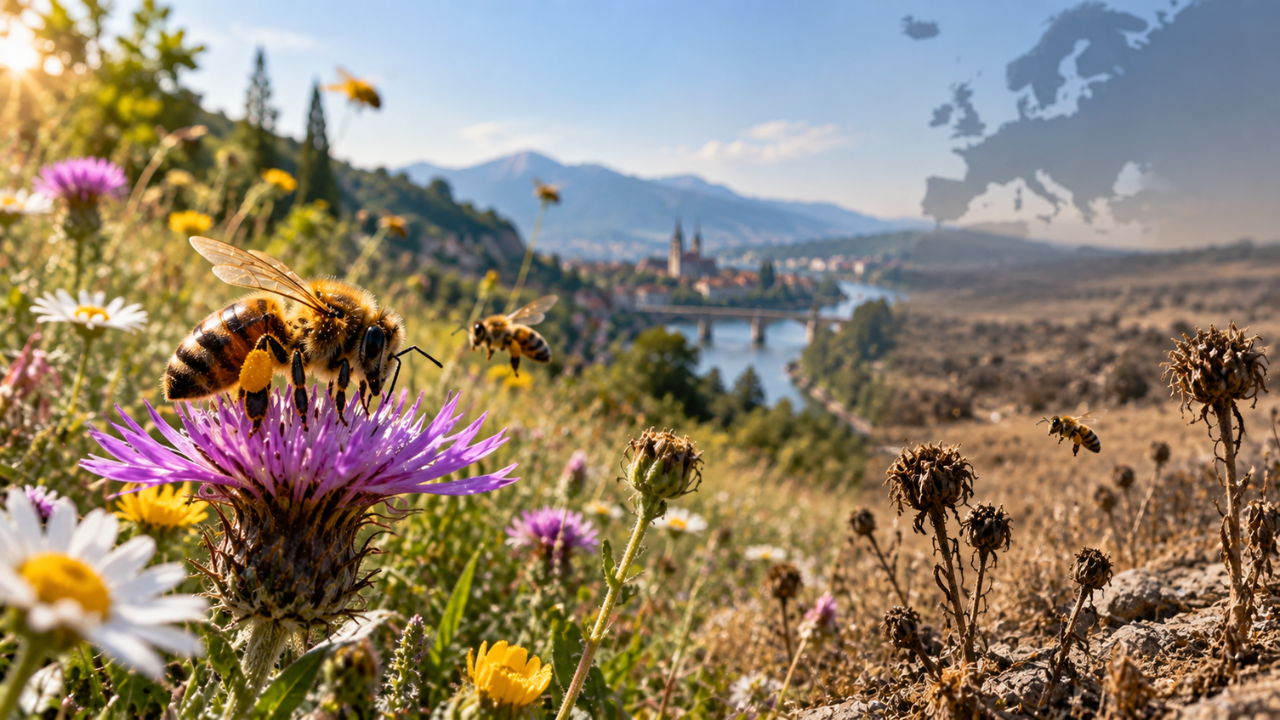
Image AI generated
Wild honeybee decline could affect Europe’s wider bee population
The decline of wild honeybees may matter not only for conservation but also for the future characteristics of the wider honeybee population. Wild colonies face different conditions from managed colonies and may experience natural selection without the medical treatments used in beekeeping. The researchers note that this can favour resistance to Varroa mites and the viruses they transmit. Managed populations, meanwhile, can be affected by the movement and trade of colonies and queen bees between countries.The researchers also caution that the 56% figure is a modelled projection, not a direct measurement of every wild honeybee colony in Europe. Their analysis uses monitoring data from seven countries and depends on assumptions about swarming and environmental variation. This leaves uncertainty about the precise population trend across the continent.