In the 1850s, pigs brought to Santa Cruz Island became feral; golden eagles drawn by piglets helped drive foxes down 95%, then 5,036 pigs were removed as foxes rebounded to 1,300+
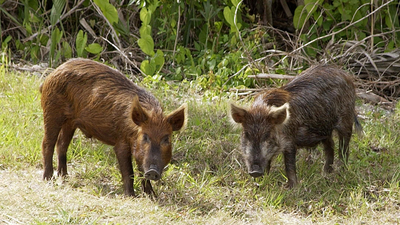
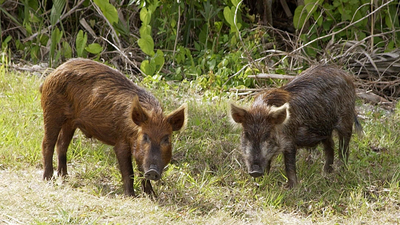
An ambitious conservation project off the coast of California has helped save the endangered Santa Cruz Island fox from near extinction. The rescue effort involved removing 5,036 feral pigs, allowing the native island fox (Urocyon littoralis santacruzae) population to recover from fewer than 100 animals to more than 1,300 across the 96-square-mile island. According to historical records and ecological recovery reports from the National Park Service and The Nature Conservancy, the crisis began after domestic pigs brought to Santa Cruz Island in the 1850s escaped and formed a large wild population.
Unintended food source brought a new predator
For decades, the feral pig population grew rapidly across Santa Cruz Island. The pigs damaged native vegetation and produced a steady supply of piglets throughout the year. This large food supply attracted golden eagles (Aquila chrysaetos) from mainland California. Golden eagles had previously avoided the northern Channel Islands because native bald eagles (Haliaeetus leucocephalus) defended their territories and kept rival birds of prey away. However, pesticide pollution in the mid-20th century wiped out bald eagles across the region. With bald eagles gone and thousands of piglets available as prey, golden eagles began breeding on Santa Cruz Island in the late 1990s. The golden eagles first arrived to hunt young pigs, but they soon began attacking the smaller and less wary island foxes. Because the foxes had evolved without regular aerial predators, they were active during the day and had little experience hiding from attacks from above. By 2000, heavy predation by golden eagles had reduced the Santa Cruz Island fox population by 95 per cent, leaving the subspecies close to extinction.
Multi-stage campaign restores the island ecosystem
To stop the decline, the National Park Service joined The Nature Conservancy in a major recovery project on Santa Cruz Island. Wildlife biologists concluded that protecting the foxes meant removing the non-native pigs that supported the golden eagle population. Conservation teams divided the rugged island into management zones and built miles of internal fencing to stop pigs from escaping into thick vegetation. Between 2005 and 2006, specialist teams removed all 5,036 feral pigs from the island. The operation used ground tracking, aerial support and trained hunting dogs. At the same time, biologists captured golden eagles and moved them to remote mountain areas on the California mainland. To prevent the birds from returning, conservationists also reintroduced bald eagles to their former nesting areas across the Channel Islands.
Captive breeding helps fox population recover
As the pig eradication programme continued, wildlife specialists set up a captive breeding facility on Santa Cruz Island to protect the remaining foxes from golden eagle attacks. Biologists captured some of the last wild foxes and paired them in protected breeding enclosures while maintaining genetic diversity. As golden eagles were removed and bald eagles returned to the region, researchers began releasing captive-born foxes into the wild. The recovery was rapid. National Park Service surveys showed wild fox numbers increasing as native vegetation began recovering from years of damage caused by feral pigs. By the time federal authorities removed the Santa Cruz Island fox from the Endangered Species List, its population had recovered to more than 1,300 breeding animals. The Santa Cruz Island project became one of the fastest wildlife recoveries under the US Endangered Species Act. It showed how removing invasive mammals can help restore native wildlife and ecosystems on islands.