
In 1967, Nasa flew flour beetle pupae into space on Biosatellite II, and wing abnormalities rose from 29.9% to 44.8% |
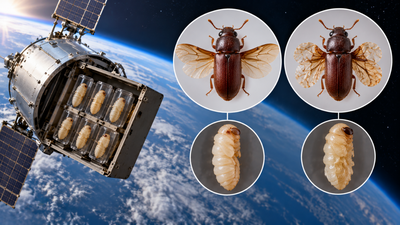
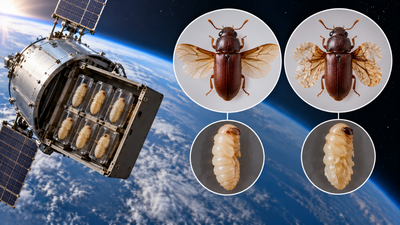
In 1967, NASA sent flour beetle pupae into space aboard the Biosatellite II experiment to examine how spaceflight and radiation could affect insect development. The mission exposed the insects to conditions that could not easily be reproduced on the ground, allowing researchers to compare their development with that of ground controls. One of the clearest findings involved abnormalities in the beetles’ developing wings. Among the ground controls, the abnormality occurred in 29.9 per cent of the insects. Among young pupae that were exposed to X-rays before flight and gamma radiation during the mission, the figure rose to 44.8 per cent. The result represented a 14.9-point increase and provided a measurable indication that the combined experimental conditions affected development. The researchers also examined the length of the pupal period, finding that flight samples took longer to develop, although they linked this difference mainly to a temperature drop during the mission’s recovery rather than weightlessness itself.
What did Nasa’s Biosatellite II find about flour beetle pupae
The flour beetle experiment focused on pupae that were exposed to X-rays before launch and gamma radiation during the flight. The treatment was intended to place the insects within a radiation-sensitive range so that developmental abnormalities could be measured. The researchers compared beetles that had flown with ground controls. According to the study published in PubMed, titled ‘Biosatellite II–physiological and somatic effects on insects’, the wing abnormality examined was similar to a mutation known as “split”. The results showed that the abnormality occurred more frequently among the beetles exposed to the combined conditions of radiation and spaceflight.The difference was measurable. Among the ground controls, the wing abnormality occurred in 29.9 per cent of the beetles. In the beetles that had been flown as young pupae, pre-irradiated with X-rays and exposed to gamma radiation during the mission, the rate increased to 44.8 per cent.The study therefore recorded a difference of 14.9 percentage points between the ground value and the flight group. The researchers measured this developmental abnormality as one way of assessing how the conditions experienced during Biosatellite II affected insect development.
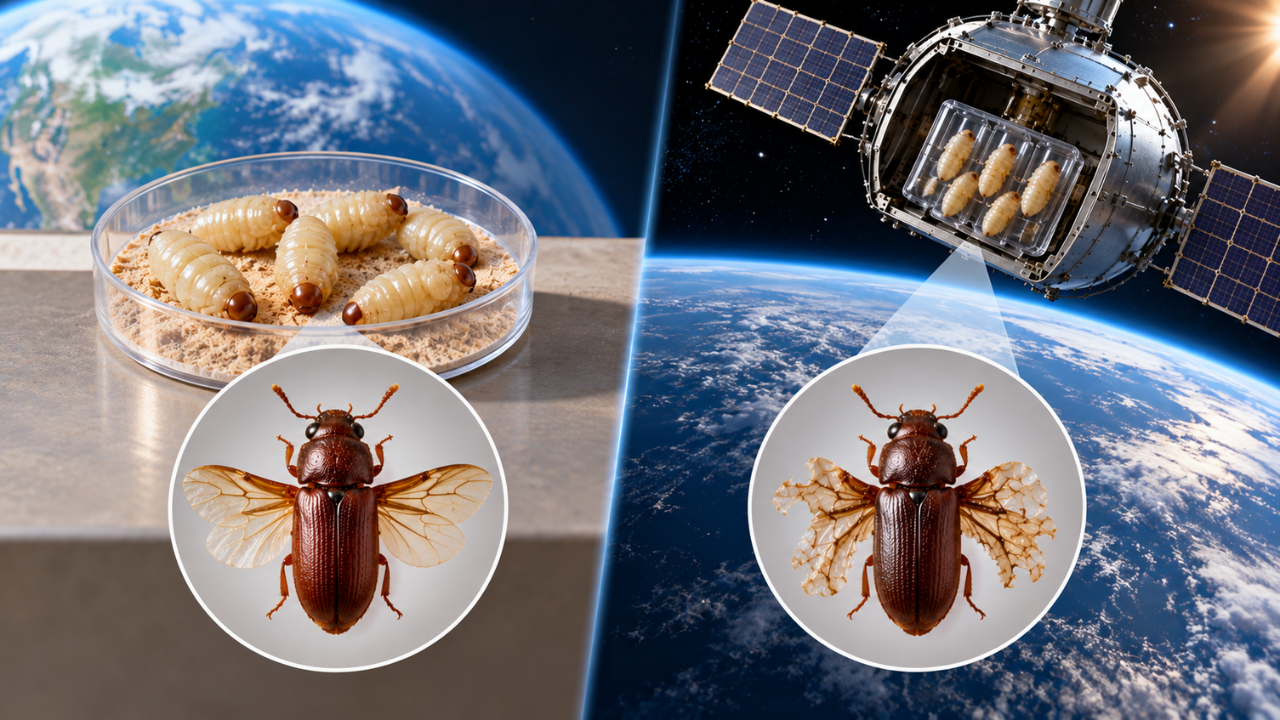
Image AI generated
Why did the pupal period become longer
Scientists also measured the length of the beetles’ pupal period. The study found a significant increase in pupal period among the flight samples compared with the ground controls.However, the researchers did not attribute this difference directly to weightlessness. They stated that the most likely explanation was a temperature drop affecting the flight samples, the spacecraft and the capsule. This distinction separated the observed developmental timing from the radiation-related increase in wing abnormalities.The Biosatellite II experiment consequently produced several measurements of insect responses to spaceflight. In the flour beetles, the clearest result highlighted in the study was the increase in wing abnormalities from 29.9 per cent in the ground controls to 44.8 per cent in the treated flight group.