‘Membership must not be used to legitimise terrorists’: India seeks transparency in UNSC | India News
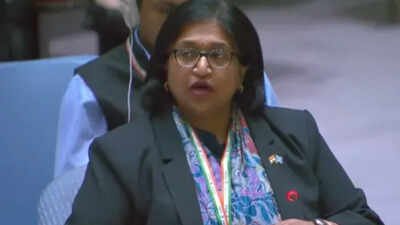
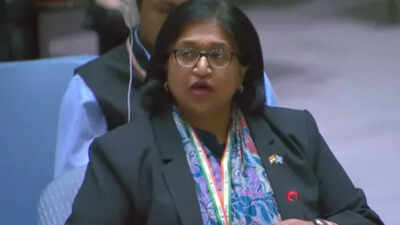
India on Wednesday called for greater transparency and objectivity in UN Security Council sanctions decisions, saying membership of the powerful 15-nation body must not be used to “legitimise” terrorists, in a veiled criticism of Pakistan’s role in dealing with terrorism.Speaking at an open debate on the Council’s working methods on Wednesday, India’s Chargé d’Affaires at the UN, Ambassador Yojna Patel, said membership of the Security Council “must not become a platform to pursue narrow political interests”.“Presence in the Security Council must not be instrumentalised to legitimise terrorists by attempting to de-list them or to list other entities as terrorist organisations based solely on political considerations, without any objective criteria or supporting documentation,” she said, as quoted by ANI.India has long criticised the lack of transparency around proposals to designate terrorists and terror organisations. While approved listings are made public, New Delhi has pointed out that the reasons why proposals are rejected or placed under technical hold are not disclosed.India has previously described this practice as a “disguised veto” and has particularly criticised the functioning of the 1267 Al-Qaida Sanctions Committee. New Delhi has also faced resistance to attempts to designate Pakistan-based terrorists, with China, a permanent Council member, blocking or placing holds on some proposals.India seeks transparency in UNSC processesThe Indian diplomat also raised concerns over the delayed appointment of chairs and vice-chairs of the Council’s subsidiary bodies. Eight months into 2026, several posts, including those overseeing the 1267 Al-Qaida and Taliban sanctions committees, remain unfilled.She called for a “definitive and non-negotiable” timeline to complete the appointments, saying the delay has affected the functioning of the subsidiary bodies.Denmark, which holds the Council presidency in August, described the delay as “unprecedented” and said it undermines the body’s effectiveness, credibility and institutional integrity.
Share your thoughts in the comments
Be respectful · TOI community guidelines
India also called for greater involvement of elected, non-permanent Council members in key processes, including the selection of the UN Secretary-General.Patel argued that the Council’s structure and working methods need to reflect the changes in the international system since 1945, when the UN was established. UN membership has since grown four-fold, she noted.“The world of 1945 has changed beyond recognition,” Patel said. “The outcome of one conflict 80 years ago cannot determine the composition, dynamics, approaches and working methods for perpetuity. This needs to change and must happen at the earliest.”