How donated milk is saving India’s most vulnerable newborns
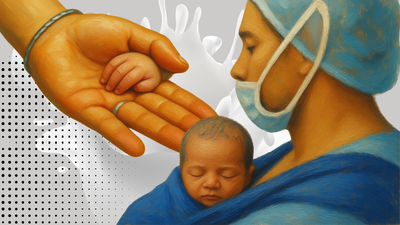
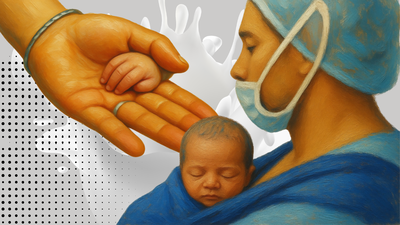
The first thing a mother wants to do after bringing a baby into the world is often the simplest: hold the child close and feed it. But for some newborns, that first feed never comes.Their mothers may be critically ill, separated from them, unable to breastfeed immediately or, in the most heartbreaking cases, no longer alive.For a premature baby weighing just a few hundred grams, however, waiting for circumstances to change is not always an option.This is where another mother can step in.Human milk banks in India are built around a quiet act of generosity: a lactating mother donates milk her own baby does not need, and through a carefully regulated medical system, that milk reaches a newborn whose own mother cannot provide it.“Milk bank helps one mother save the baby of another mother,” said Dr Poonam Sidana, director of neonatology and paediatrics at CK Birla Hospital, Delhi.The idea may sound straightforward. But behind every bottle is a mother who has agreed to share something deeply personal and another family placing its trust in a system to provide their fragile newborn with the safest possible nourishment.
When a mother is not there
Dr Satish Tiwari, founder and convener of the Human Milk Banking Association of India and professor of paediatrics, has spent decades trying to expand that system.He traces the movement in India to 1989, when the first human milk bank in India and Asia was established at Sion Hospital in Mumbai by Dr Armida Fernandes. By the mid-1990s, Tiwari had begun exploring milk banking while working on maternal and child nutrition and malnutrition.“What we realised was that milk banks are needed not only in Mumbai or Surat or Udaipur, but it is a requirement all over India,” he said.The babies who need donor human milk, he explained, are often those who have been separated from their mothers for reasons beyond anyone’s control.A newborn may be admitted to a NICU at 500g or 700g, born at seven or eight months of gestation and too weak to breastfeed. The mother may have to return home while the baby remains in hospital.“Mother may not be available for months when he is admitted in a neonatal care unit,” Tiwari said.Then there are babies whose mothers have died.“There may be the death of the mother. So the mother herself is not available for the baby,” he said.There are also abandoned newborns and babies whose mothers are temporarily unable to breastfeed.In such situations, the conventional fallback has often been formula or other substitutes. But for a vulnerable premature baby, doctors say human milk can make an important difference.“If you feed on mother’s milk, which is through the milk bank, then the child’s improvement or the child’s outcome as far as his life is concerned becomes much, much better,” Tiwari said.
The babies for whom every feed matters
For premature and low-birth-weight infants, the issue is not simply about calories.Their digestive and immune systems are still developing, making them especially vulnerable to infections and serious complications.Sidana said the strongest evidence for donor human milk is in premature and low-birth-weight infants, particularly in reducing the incidence of necrotising enterocolitis, or NEC, a severe condition that can damage the intestine and, in serious cases, lead to infection and death.“Donor human milk is believed to bring down the incidence of necrotising enterocolitis and some infections more than formula does in premature babies,” she said.Human milk also contains bioactive and immune components that formula cannot replicate.But Sidana is clear about the hierarchy: when a mother can breastfeed her own baby, that remains the ideal.“A mother’s own milk, preferably via breastfeeding, is the best option since it is optimal for her infant and has the required nutrients and immunity that facilitate his or her growth and resistance to infections,” she said.Donor human milk becomes the next option when that first choice is temporarily or permanently unavailable.Dr Sakshi Goel, senior consultant in obstetrics and gynaecology at Madhukar Rainbow Children’s Hospital, Delhi, described it as a “transitional or supplemental resource” for newborns at risk.“It should not take away from the importance of establishing and continuing with lactation,” she said.
The mother who gives
That distinction is important because milk banks do not exist simply to distribute milk. They also help mothers breastfeed and, when possible, produce enough milk for their own babies.Tiwari strongly challenges the widespread belief that most mothers simply do not produce enough milk.“The concept that mother is not able to make enough milk, basically we feel it is a misconception,” he said.In most cases, he explained, breastfeeding is a physiological process. Difficulties can arise because of delayed initiation, poor positioning, inadequate feeding or the early introduction of formula or bottle feeding.“If we start top milk or powder milk, then the mother’s milk, it goes on decreasing,” he said.That is why milk banks and lactation centres first try to understand why a mother believes she does not have enough milk.“If there is some fault, we try to manage that fault in the feeding,” Tiwari said. “And then we convince the mother that she has more milk as compared to the requirement of her child.”Only when a mother has enough milk for her own baby does the conversation turn to donation.“She cannot only feed her child, but she can also donate the milk,” he said.For many mothers, that can become an unexpectedly emotional decision.They are not donating something abstract. They are expressing, collecting and handing over milk their bodies produced to nourish their own child.But in a regulated system, they know where it is going: to a newborn who needs it.
How does a mother donate?
The process begins not with a bottle, but with a conversation.Goel said a mother who wants to donate should approach a reputable human milk bank or Comprehensive Lactation Management Centre rather than trying to donate informally.The centre counsels her, reviews her medical history and determines whether she is eligible.“After that, the mother goes through the essential screening and testing and is given instructions on how to express, collect and store her milk,” Goel said.The milk is then collected through the recognised channel and subjected to the necessary processing and safety checks.Tiwari said milk banks initially relied heavily on mothers delivering in the same hospital. But awareness has slowly widened the donor pool.“Now we have that type of mother also,” he said of women who hear about milk banks and voluntarily approach them.Some centres have even begun using milk collection vans to travel between hospitals and homes.There is no commercial transaction involved.“There is no monetary benefit to the mother who is donating,” Tiwari said. “Similarly, we do not charge any mother for getting milk also.”“Neither we give money or monetary benefit to the donor nor to the recipient. It is totally voluntary.”That word — voluntary — is central to the idea. A mother is never expected to compromise her own baby’s nourishment. She gives only what is surplus.
Medical journey before reaching baby
The emotional generosity of donation is matched by a rigorous safety system.Donors are screened for communicable diseases and other health risks. Their medications are reviewed, as are lifestyle factors that could make the milk unsafe.“We take three or four precautions,” Tiwari said.Mothers are screened for illnesses such as hepatitis B and C and other infections that could potentially be transmitted to a recipient. They are also assessed for medicines that could harm a baby.“If she is on some psychotropic drugs or some anti-cancer drugs or if she is on some habit-forming drugs, then we have to take care of that also,” he said.Smoking and alcohol consumption are also considered.“All these factors are considered, and screening is completed before collecting the mother’s milk,” he said.The donated milk then goes through processing and testing.According to Sidana, India’s standards include Holder pasteurisation, in which milk is heated to 62.5°C for 30 minutes and then rapidly cooled.Samples undergo microbiological testing, and pasteurised milk is released only when cultures do not show bacterial growth.Pasteurisation does mean that donor human milk is not biologically identical to fresh mother’s milk.“Pasteurization processes modify various parts of human milk, especially a number of heat-sensitive enzymes and immune factors,” Sidana said.But, she added, it preserves the nutritional composition and many of the biological qualities of human milk while significantly improving safety.For a highly vulnerable premature baby, that balance matters.
Why informal sharing is not the same thing
The instinct to help another mother can be powerful enough to encourage direct sharing through friends, social networks or online groups.But doctors caution against confusing generosity with safety.“A regulated milk bank is run in accordance with a proper medical and quality-control system,” Sidana said.There is donor screening, testing, pasteurisation, storage and traceability.With informal sharing, those safeguards may disappear.“There might be doubts about the health condition of the donor, medications that were taken, how the milk was stored, and whether it comes from the right source or is contaminated,” Sidana said.The warning is particularly important for premature and sick newborns whose immune systems are already fragile.“The problem does not lie in people who generously donate the milk,” she said. “There is a problem of the lack of screening, control over the sources, storage practices, and testing for milk intended for very vulnerable neonates.”
More needy babies than donor mothers
The need for donor human milk can be greater than the available supply.Tiwari said many milk banks are still unable to meet the complete requirements of the hospitals where they operate.Goel said there is no reliable real-time evidence pointing to a single nationwide shortage because availability differs considerably between hospitals and regions. But demand can exceed local supply, especially where large numbers of premature or medically fragile newborns are being treated.When that happens, the most vulnerable babies are prioritised.“The main point is fair allocation of resources while at the same time helping mothers with the establishment and maintenance of their own milk supply,” Goel said.This is one reason awareness matters so much.At JIPMER, a July 2025 PIB release noted that the Amudham Thaipaal Maiyam’s average voluntary milk collection had grown from about 400ml a day in its early years to around 1,000ml a day, with at least 20 babies, particularly premature infants, benefiting every day.But Tiwari believes India still has a long way to go.He said his association reaches doctors, medical students and hospitals through conferences, talks and awareness campaigns. NGOs and organisations such as Rotary have also helped with equipment, infrastructure and publicity.“We are doing publicity on media. We are doing mouth-to-mouth publicity by the mother who has received the milk for her baby,” he said.
Small act with enormous human meaning
Human milk banking is ultimately a story about mothers.One mother may be sitting beside her own healthy baby, expressing milk her child does not immediately need.In another ward, another mother may be sitting beside an incubator, watching a tiny chest rise and fall and wondering whether her baby will make it through the night.
Share your thoughts in the comments
Be respectful · TOI community guidelines
Tiwari’s message is simple.“Mother’s milk is best for any newborn child,” he said.And for mothers who have more milk than their own babies need, he wants hesitation to give way to awareness.“Most of the mothers, they have more milk as compared to the requirement of her child,” he said. “Mother or the relatives or the grandparent, they should not hesitate in donating the milk.”There is no grand ceremony when a bottle of donor milk leaves a milk bank.It is labelled, tested, pasteurised, stored and eventually carried to a NICU.But inside that bottle is something much larger than milk.It is the generosity of one mother reaching a baby she may never see.And for a newborn who has arrived too soon, whose mother is too ill, or who has lost the person who was meant to feed them, that generosity can become a lifeline.