
Have I done the world good, or have I added a menace?
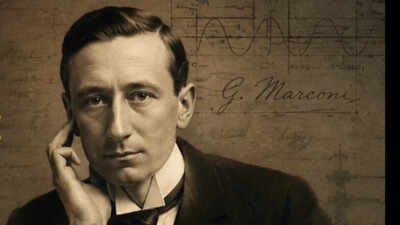
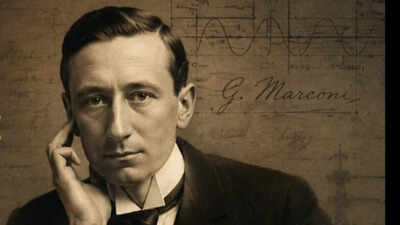
Two inventors can build something genuinely new and end up asking very different questions about it afterwards. One asks only whether it worked, whether it sold, whether it earned money or recognition, and stops there, satisfied. The other asks a harder question years later, once the invention has left their hands entirely and started being used by people and for purposes they never controlled: did the world actually end up better for it, or did it simply hand someone a tool for harm they wouldn’t otherwise have had? This question, widely credited to Marconi though not traceable to a single dated speech or letter the way some of his other remarks are, belongs entirely to the second category. It isn’t about whether the invention functioned as designed. It’s about what happened once it stopped being only the inventor’s to direct, and became something the rest of the world could use however it chose.
Quote of the day by Guglielmo Marconi
“Have I done the world good, or have I added a menace?”
Written by the man who put a voice in the air
Whatever the precise sourcing of this specific line, the question it poses maps closely onto Marconi’s own documented history. He achieved the first transatlantic wireless radio transmission in 1901 and won the 1909 Nobel Prize in Physics, building the foundation for a technology that connected the world in ways no previous invention had: ships communicating with distant ports, news travelling instantly across oceans, and eventually broadcast radio reaching into millions of homes. In 1912, he told Technical World Magazine that the wireless era would make war “impossible, because it will make war ridiculous,” a confident, almost utopian prediction about what his invention would do for humanity.History complicated that prediction considerably. In the 1920s and 1930s, Marconi became a committed supporter of Italy’s Fascist regime, joined the Fascist Party, and served on the Fascist Grand Council under Mussolini, lending his international prestige to a government that went on to use the very medium he had pioneered as one of its central tools for mass propaganda. Whether or not Marconi ever posed this exact question in these exact words, the tension it names- the same invention meant to connect and pacify humanity instead becoming a tool for exactly the kind of conflict he once predicted it would end- played out directly within his own lifetime, in part through his own political choices.
A simple way to actually use this idea
The useful move here is recognising that this question applies well beyond any single invention or inventor. Any sufficiently powerful tool, a technology, an institution, an idea released into the world, eventually escapes the intentions of whoever created it, and gets used for purposes its creator may never have wanted or foreseen. This is not a problem unique to radio or to the early twentieth century. The same tension shows up in every generation’s most consequential inventions, from the printing press, which spread both literacy and propaganda in roughly equal measure, to modern communication platforms, which have connected distant strangers and radicalised them in equal measure. Asking the question honestly, rather than only celebrating the achievement itself, is what separates a genuinely reflective creator from one who simply moves on to the next project without ever looking back at what the last one actually did once it left their hands.A fair test, for anyone building or releasing something with real reach, whether it’s a piece of software, a piece of writing, or an organization, is to ask periodically, once the thing is out in the world and no longer fully under your control, whether it is still doing more good than harm, and to take that answer seriously even when it’s uncomfortable to sit with. Marconi’s own life suggests that even the person who built the thing may not fully see the answer while they’re still living inside the story.
Other famous quotes by Guglielmo Marconi
- “The coming of the wireless era will make war impossible, because it will make war ridiculous.”
- “Every day sees humanity more victorious in the struggle with space and time.”
- “What a sad era when it is easier to smash an atom than a prejudice.”