
Quote of the day by Isaac Newton: “I can calculate the motion of heavenly bodies but not the madness of people” – why human behaviour is harder to predict than the stars |
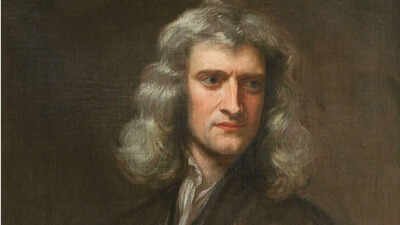
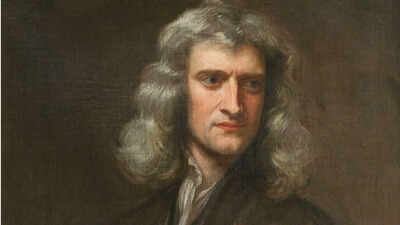
Isaac Newton spent his entire career proving that the universe follows precise, predictable laws. Then he lost a fortune betting on people, and admitted the difference out loud. “I can calculate the motion of heavenly bodies but not the madness of people,” he is reported to have said, after watching his own investment collapse alongside thousands of others during one of the strangest financial disasters in British history. It is a strange kind of comfort, in a way, that even the man who worked out the laws of gravity could still be swept up by an ordinary stock market frenzy, and honest enough to say so afterwards rather than pretend his mistake had been anything other than exactly that mistake.
Quote of the day by Isaac Newton
“I can calculate the motion of heavenly bodies but not the madness of people.”
What is the meaning behind the quote by Newton
On first read, the line sounds like a joke. Underneath the wit is a genuine observation about the gap between the physical world and human behaviour.Newton spent much of his life uncovering mathematical laws that explain motion, laws that describe how planets, falling apples and ocean tides all behave according to consistent principles. Once those laws were understood, predicting many natural events became possible with real precision.People do not work the same way. Two individuals facing an identical situation can respond completely differently, because human decisions get pulled around by fear, pride, hope and habit in ways no equation captures. Newton is pointing at exactly that gap, between knowledge that holds because nature is consistent, and human behaviour that resists prediction because people are not.
A scientist who lost a fortune to human madness
Newton is remembered as one of history’s greatest scientists. Born in England in 1642, his book Philosophiæ Naturalis Principia Mathematica introduced the laws of motion and universal gravitation, giving a single mathematical explanation for everything from a falling apple to the orbit of the Moon.His remark about madness came from a much more personal, much less flattering episode. In 1720, Newton bought shares in the South Sea Company, a British trading firm whose stock price had been climbing rapidly on speculation rather than genuine business performance. He sold early and made a decent profit, then watched the price keep climbing without him, and bought back in near the very top of what became known as the South Sea Bubble. When the bubble collapsed shortly afterwards, Newton lost around twenty thousand pounds, a genuinely enormous sum at the time. He is said to have made this remark in the aftermath, and reportedly refused to hear the words “South Sea” mentioned in his presence again for the rest of his life.That story gives the quote real weight. This was not an abstract observation from a comfortable distance. It came from one of the most rigorous minds in history, freshly humbled by exactly the kind of collective, irrational behaviour his own laws of motion could never have predicted.
Why people remain less predictable than planets
Modern science has become remarkably good at predicting natural events. Astronomers forecast eclipses decades ahead. Engineers calculate precisely how a bridge will respond to load. Weather forecasting keeps improving as computer models get more sophisticated.Predicting human behaviour has not kept pace. Economists still fail to see financial crises coming with any real consistency. Political forecasters regularly get election results wrong. Companies launch products expected to succeed and watch public interest go somewhere else entirely.The reason sits in how people actually make decisions. Emotion, memory, culture and social pressure all shape behaviour in ways a mathematical model struggles to represent. Newton’s own South Sea losses are a small, personal case study in exactly this problem, a brilliant, rational mind pulled along by the same speculative excitement as everyone else around him.
The balance between reason and empathy
One of the useful lessons buried in this quote is that intelligence works best alongside humility. Knowledge is a genuinely powerful tool, but it does not remove uncertainty from situations involving other people.This shows up well beyond science. Disagreements at work or within families often continue not because anyone lacks information, but because people are interpreting the same situation through different experiences and values. Facts alone rarely settle that kind of disagreement. Listening usually does more work than being right.
Other famous quotes by Isaac Newton
- “If I have seen further it is by standing on the shoulders of giants.”
- “Truth is ever to be found in the simplicity, and not in the multiplicity and confusion of things.”
- “To every action there is always opposed an equal reaction.”
- “What we know is a drop, what we do not know is an ocean.”
- “Tact is the art of making a point without making an enemy.”
A reminder that people are wonderfully complicated
Newton’s remark has lasted because it captures a genuine paradox. The same mind capable of explaining how the entire solar system moves still lost a fortune to the ordinary madness of a stock market bubble. Mapping the universe turned out to be the easier problem.That is really the lasting point behind the quote. Nature follows laws precise enough to predict centuries in advance. People do not, and pretending otherwise, even for someone as brilliant as Newton, tends to cost something in the end.