
German startup unveils solar panel that produces hydrogen without electricity; here’s how it works |
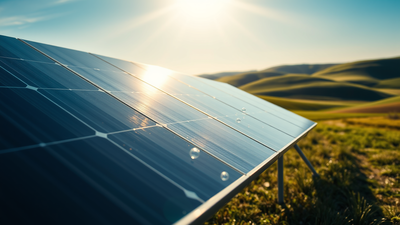
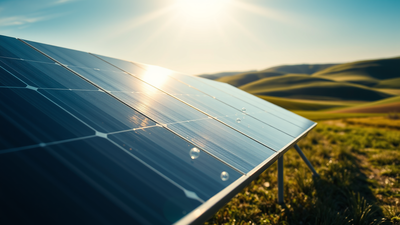
Producing green hydrogen has always required two separate machines: solar panels to generate electricity and an electrolyser to split water using that electricity, both of which add cost, maintenance, and often a grid connection. A four-person spin-off from Germany’s Karlsruhe Institute of Technology says it has found a way to skip the middle step entirely. The startup, called Photreon, unveiled a working one-square-metre panel at the Hannover Messe trade fair in April 2026 that absorbs sunlight and water and produces hydrogen gas directly, with no electricity generated at any point in the process. The institute has filed a patent application covering the panel’s internal design, though the technology faces the same efficiency hurdles that have limited efforts for two decades.
What is Photreon’s solar hydrogen panel and how does it work
Photreon’s product is a photoreactor panel, a flat device that takes in sunlight and water and releases hydrogen gas without ever producing electricity as an intermediate step. The team demonstrated a working one-square-metre prototype at the KIT booth during Hannover Messe, which ran from April 20 to 24, 2026. According to KIT’s official announcement, the institute has filed a patent application covering the reactor’s internal geometry, the specific arrangement of materials and channels inside the panel that makes the whole process work in one step rather than two. Paul Kant, a researcher at KIT’s Institute for Micro Process Engineering and Photreon co-founder, has said the design produces chemical energy directly from sunlight and water, bypassing electrolysis altogether.
How photocatalysis lets this panel skip the electrolyser entirely
The technology behind the panel is called photocatalysis, a fundamentally different process from how a standard photovoltaic panel works. Instead of converting light into an electric current, Photreon’s panel uses light-sensitive materials that absorb sunlight and push electrons into an excited state, and those energised electrons immediately drive a chemical reaction that splits water molecules into hydrogen and oxygen inside the panel itself. Kant has explained that the reactor’s internal geometry is engineered to handle three tasks simultaneously, guiding light onto the active material, running the water-splitting reaction, and extracting the resulting gases efficiently. That last task has historically been the hardest part, since a panel that produces hydrogen but cannot collect it cleanly has limited practical use.
Why photocatalytic hydrogen panels have struggled with low efficiency
Despite the elegant concept, photocatalysis has a long history of poor real-world performance. A widely cited study published in Nature in 2021 measured real-world photocatalytic water-splitting efficiency at around 1 per cent, far below the 30 per cent achieved by lab systems that pair solar cells with electrolysers. The same research documented a 100-square-metre outdoor demonstration array in Japan that ran for a year and peaked at just 0.76 percent efficiency. A later 2023 study using an indium gallium nitride catalyst under concentrated sunlight reached a best-published figure of 9.2 per cent, though that dropped to about 7 percent when tested with ordinary tap water and seawater. Researchers generally consider 10 percent the threshold needed for the technology to make commercial sense.
How Photreon plans to make cheap hydrogen panels commercially viable
Rather than chasing efficiency records, Photreon is betting on manufacturing cost instead. The panel is designed around standard mass-production techniques and inexpensive materials, and the system is built to be modular, scaling from a handful of units on a factory roof to thousands of panels wired together into what KIT describes as solar hydrogen farms. Co-founder Maren Cordts has framed the appeal in system-level terms, noting that a single panel replaces both the solar array and the electrolyser, cutting cost and complexity at once. The company is targeting mid-sized manufacturers in sectors such as speciality chemicals, food production, and metalworking, along with large solar installations and remote sites that currently have access to neither a power grid nor a hydrogen pipeline.
Who else is racing to build sunlight-to-hydrogen technology
Photreon is not alone in chasing direct sunlight-to-hydrogen production. Israel’s QD-SOL has pursued a similar nanoparticle-catalyst approach and reported connecting multiple photocatalytic panels into a continuously producing array in 2025. SunHydrogen, a publicly traded company based in Iowa, brought in University of Tokyo researchers behind Japan’s large outdoor demonstration as consultants in 2023 to help refine its own panel design. Every competitor in this space is working against the same single-digit efficiency ceiling that has constrained the field for two decades, which means the eventual winner will likely be whichever company first combines an acceptable conversion rate with genuinely low manufacturing costs, a combination nobody has yet managed to deliver.