Cotton-candy planets and metal rain: NASA finds some of the strangest worlds in space |
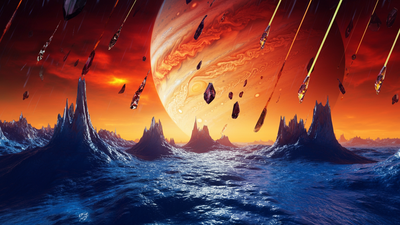
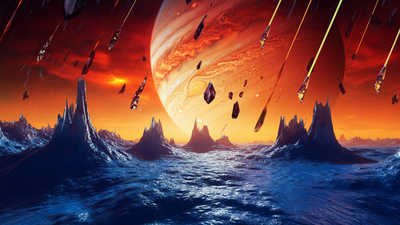
Astronomers have catalogued more than five thousand planets orbiting distant stars, and a handful of them defy almost everything scientists thought they knew about how planets should look or behave. Using telescopes like Hubble, James Webb, and ground-based observatories such as Gemini South, researchers have found worlds so strange that they initially seemed implausible: a gas giant so puffy it has the density of cotton candy, a deep blue planet where scorching winds drive sideways rain made of molten glass, a rocky super-Earth covered by an ocean of lava, and an ultra-hot Jupiter where vaporized metal condenses into rain. Each of these discoveries is forcing planetary scientists to rethink long-standing models of how planets form and survive near their stars.
NASA’s James Webb and Hubble telescopes are redefining what counts as a planet
Since the first confirmed exoplanet discovery in the 1990s, astronomers have used transit photometry, radial velocity measurements and direct imaging to identify thousands of worlds beyond our solar system. The strangest of these tend to be hot Jupiters and super-Earths orbiting extremely close to their host stars, where temperatures can exceed 2,000 degrees Celsius and atmospheric chemistry behaves in ways nothing in our own solar system prepares us for. Modern instruments such as the James Webb Space Telescope’s NIRCam and MIRI cameras, alongside ground-based spectrographs like IGRINS at the Gemini South Observatory, now let researchers measure not just a planet’s size and orbit but the actual composition of its atmosphere, clouds and even its weather. These tools have turned exoplanet science from a hunt for new worlds into a detailed study of alien climates.
WASP-193b, the “marshmallow planet” with a density like cotton candy
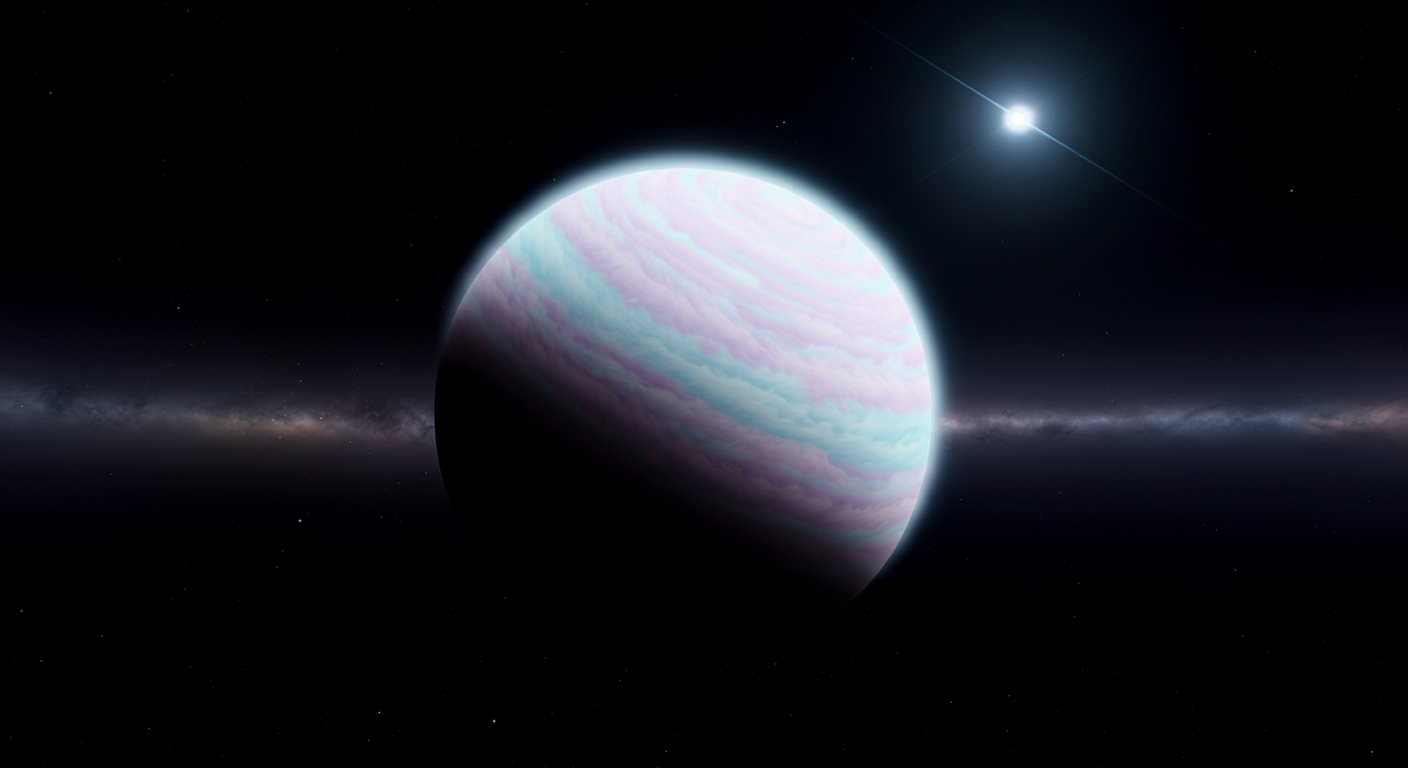
WASP-193b, located roughly 1,200 light-years away, is one of the strangest gas giants ever measured. A study published in Nature Astronomy found that the planet is fifty per cent larger than Jupiter yet only about a seventh of its mass, giving it a density of just 0.059 grams per cubic centimetre, roughly comparable to cotton candy and at least an order of magnitude lower than typical gas giants. The research team, led by Khalid Barkaoui at the University of Liège, found the planet’s atmosphere extends tens of thousands of kilometres further than expected for its size, likely composed mostly of hydrogen and helium puffed up by intense heat from its star. The study notes that current evolutionary models cannot fully explain such extreme inflation, making WASP-193b a priority target for further observation with the James Webb Space Telescope.
HD 189733b, the blue planet where it rains molten glass sideways
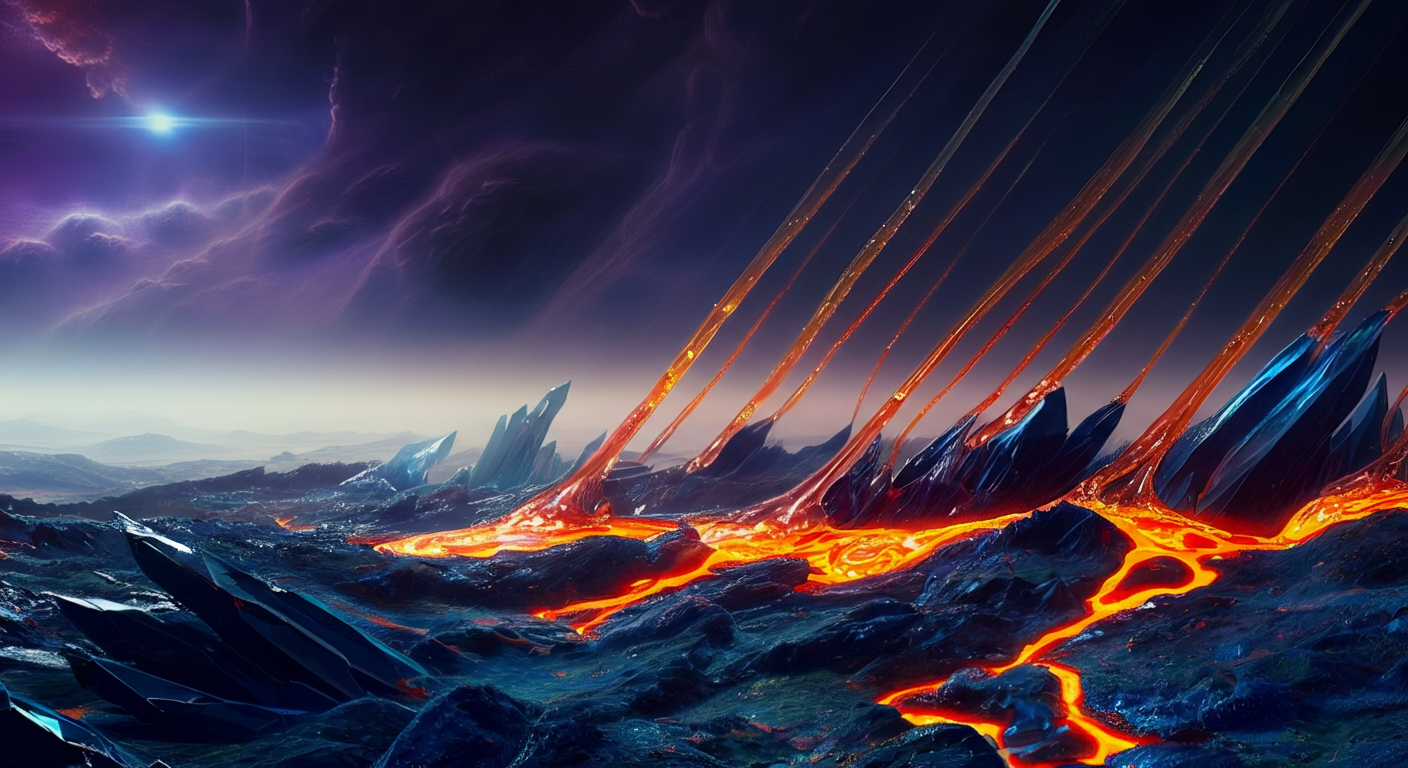
HD 189733b, a hot Jupiter just 63 light-years from Earth, became famous after astronomers measured its actual visible-light colour for the first time. A study in The Astrophysical Journal Letters used the Hubble Space Telescope’s imaging spectrograph to measure the planet’s geometric albedo across visible wavelengths and found it scatters blue light strongly enough to appear a deep cobalt blue, an effect the researchers attribute to high-altitude clouds of silicate particles rather than any ocean. With daytime temperatures near 1,000 degrees Celsius and winds howling past 7,000 kilometres per hour, those silicate clouds are thought to condense into tiny glass-like droplets that get blown sideways across the planet, effectively raining glass through its atmosphere.
55 Cancri e, the lava world with a secondary atmosphere
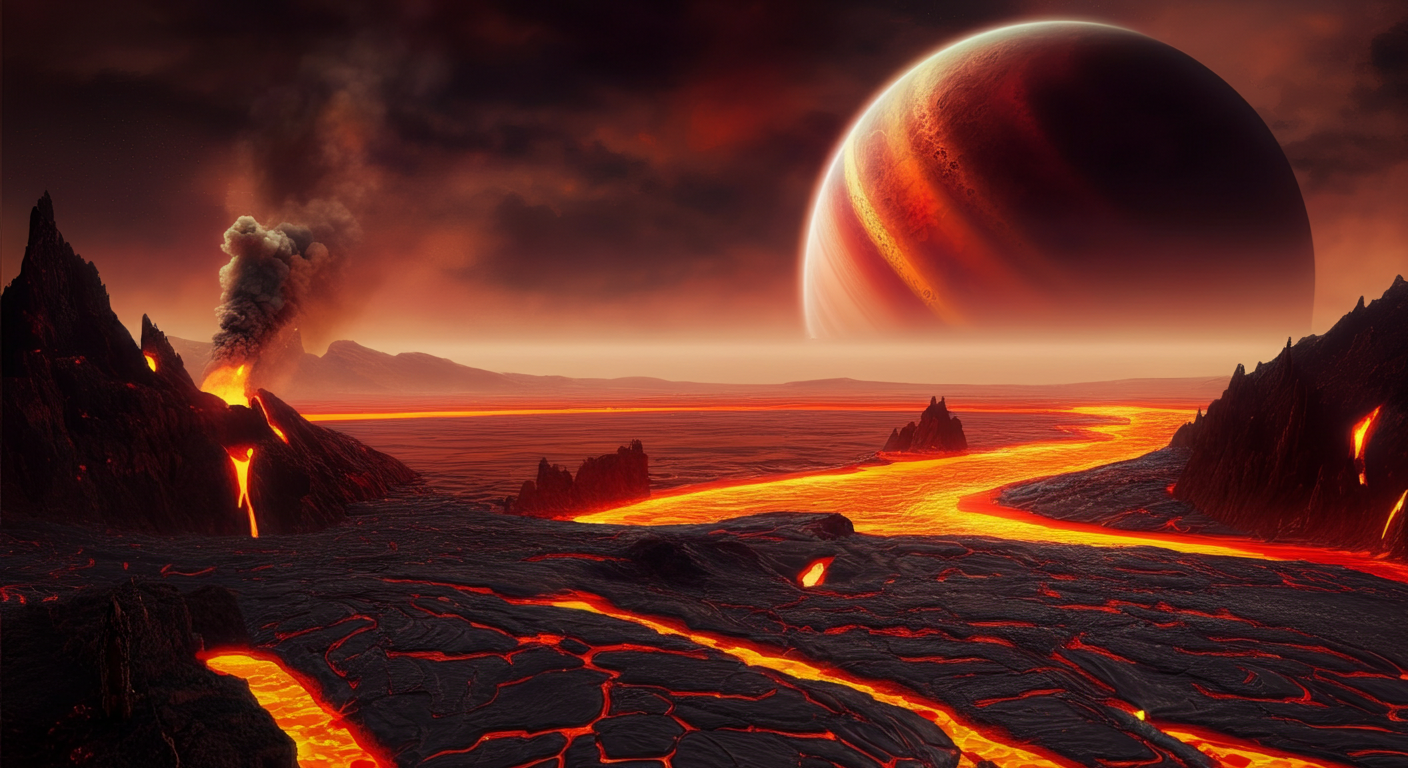
55 Cancri e, a rocky super-Earth roughly twice the size of our planet, orbits its star so closely that a year lasts less than a day, leaving its surface mostly molten. Using the James Webb Space Telescope’s NIRCam and MIRI instruments, a team led by Renyu Hu at NASA’s Jet Propulsion Laboratory captured a thermal emission spectrum, published in Nature, that ruled out the idea of a bare lava world cloaked only in a thin veil of vaporised rock. Instead, the measurements point to a genuine secondary atmosphere likely rich in carbon dioxide or carbon monoxide, continuously outgassed from a magma ocean beneath the surface. The dayside brightness temperature of around 1,540 degrees Celsius was far cooler than expected for an airless lava world, suggesting heat is being redistributed by this volatile-rich atmosphere rather than carried only by molten rock.
WASP-121b, the ultra-hot Jupiter where metal and gemstones rain down
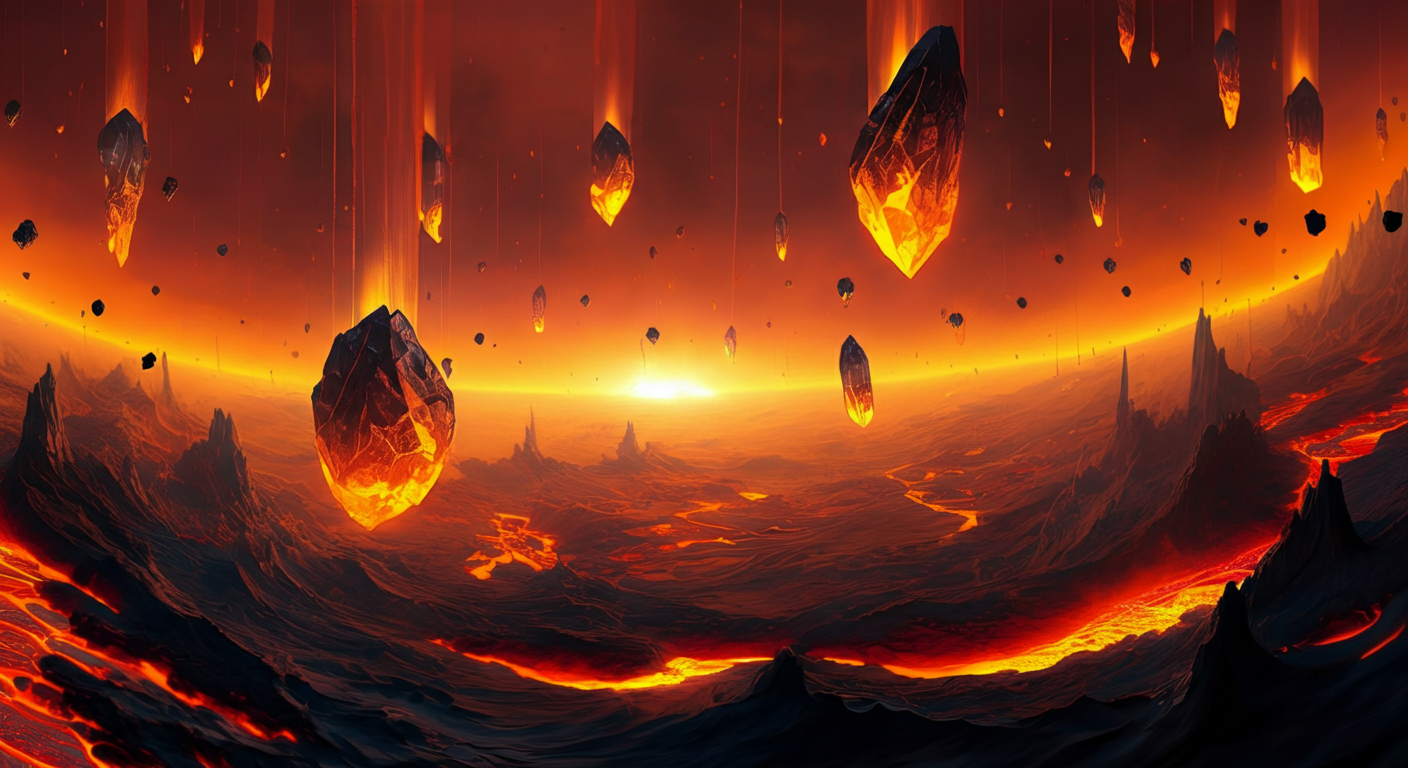
WASP-121b belongs to a class nicknamed “roasting marshmallows,” ultra-hot Jupiters so close to their stars that their daysides reach temperatures hot enough to vaporise metal. Observations using the IGRINS spectrograph on the Gemini South telescope, published in The Astronomical Journal, detected vaporised metals in the planet’s scorching dayside atmosphere that winds of more than 17,000 kilometres per hour sweep toward the permanently dark nightside, where they cool and condense into rain made of elements such as calcium, alongside theorised showers of liquid metal and gemstones. The study’s chemical measurements suggest WASP-121b may have formed much closer to its star than standard planet-formation theories allow, complicating astronomers’ understanding of how such extreme worlds come to exist in the first place.