
In 1896, Henri Becquerel left uranium salts in a drawer wrapped with photographic plates, which opened the door to nuclear science

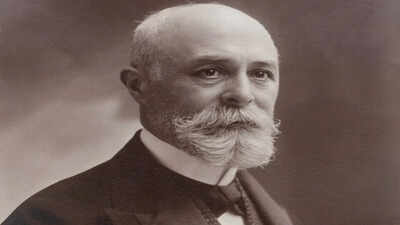
Henri Becquerel accidentally uncovered radioactivity by keeping photographic plates in the dark. Image credit – Wikimedia
Some of the greatest scientific discoveries started out unexpectedly. One such case was a finding made in 1896 by the French scientist Henri Becquerel during experiments with phosphorescent substances. Photographic plates, which had been wrapped together with uranium salts, became fogged even though the scientists had stored them away from sunlight.This mysterious stain became the beginning of an epoch-changing process. It turned out that some materials have natural abilities to emit energy. Thus, the world got acquainted with the phenomenon of radioactivity as well as the idea that atoms can be unstable.Scientific inquiry led to experimentationBecquerel did not start to perform random tests that helped him discover radioactivity. As explained in a retrospective article indexed in the PubMed database, his experiments had to do with phosphorescence and fluorescence after Wilhelm Röntgen discovered the first X-rays in 1895.Scientists all over Europe wanted to find out whether the effects of X-rays were similar to those caused by phosphorescent substances. Therefore, Becquerel decided to experiment with uranium salts because they were already well-known for their properties. The experiment appeared to be simple. Uranium salts were put on the covered plates and were supposed to be activated by sunlight. However, due to clouds, the experiment was postponed, and the plates were kept in a drawer.In the case of the development of the plates from Becquerel, dark spots could be seen even though there was no sunlight in the experiment. It was a pivotal moment of his research. Uranium was causing those dark spots on the plates.Fogged plates changed physicsAt that time, everyone believed that plates should be exposed to sunlight or rays of a comparable type. According to the researches, Becquerel noticed that there is natural radioactivity because uranium created black spots without the influence of any sunlight.Consequently, this observation posed a challenge to the previous thoughts about the nature of matter. As uranium could affect plates without sunlight, it must radiate something new. It gained a lot of attention as it was known that uranium had some special feature which was previously undiscovered.Later, Marie Curie expanded the discovery, naming it radioactivity. She and her husband Pierre Curie worked together to discover other radioactive elements such as polonium and radium.

A fogged plate in Henri Becquerel’s desk drawer helped shatter the idea that atoms never change. Image credit – Gemini
Effect of the discovery on scienceIt became apparent at once how significant the experiment performed by Becquerel had been. The discovery opened the door to research into alpha, beta, and gamma rays and the emergence of contemporary nuclear physics.Before this discovery, almost everybody thought that atoms were stable and eternal. Radioactivity challenged this hypothesis. The atoms of uranium produced energy without any outside stimuli, suggesting that they were dynamic.Science historian Spencer Weart, during lectures on early experiments in nuclear physics, said that this discovery revolutionised the concept of matter itself. The scientists found out that atoms were not eternal. Radioactivity had implications beyond the realm of physics. Eventually, it became important in medical imagery, cancer treatment, archaeology, and power production.Importance of the “drawer” storyThe picture of the foggy photographic plates left in a desk drawer was indelible. The discovery of Becquerel was accidental in the sense that he wanted to understand the phenomenon of phosphorescence. However, it would be wrong to say that the scientist stumbled upon his discovery by accident. He recognized right away that the blackened plates were special and required additional study.Usually, it is typical of science that some phenomenon appears incidentally during experiments, but only a researcher with certain preparedness notices the importance of the discovery. This example looked even more interesting because of its contemporaneity. Modern scientists usually discover something new when they try to study something else.A small spot with a huge impactAt first, it seemed that those spots on the Becquerel photographic plates did not matter very much, but, in fact, they had a great influence on science development. Very soon, it was suggested that energy was spontaneously emitted from atoms.It gave rise to nuclear physics as a branch of science that changed mankind’s understanding of the world. More than a century has passed since then, yet this example still illustrates the potential that science has to suddenly change its course due to some impossible-to-explain phenomena.