
In 1957, a local discovery of a tiny coin in Maine opened debate about Vikings reaching native shores |
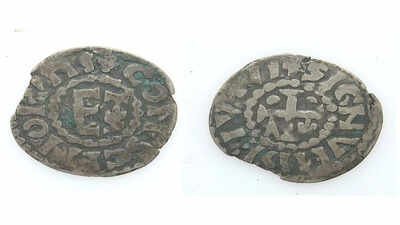
A small discovery that sparked big questions later in the history of America. In 1957, a local resident discovered an odd-looking coin while digging at a nearby shell midden on the coast of Maine. While it initially seemed like nothing more than a scrap of metal, it was later classified as a Norwegian coin dating back to the eleventh century. Now called the Maine Penny, the artefact raised widespread discussion regarding its history.How did a coin from medieval Norway come to rest among coastal Native Americans’ remains in New England? This question is complicated and one that historians couldn’t easily resolve.Where was the coin found?This coin was discovered at a shell midden, a term for an archaeological site containing layers of shells, garbage, and other waste material from ancient indigenous cultures. Shell middens are common throughout Maine’s coast and reflect many years of use by Native American peoples.According to the Maine Historic Preservation Commission, these sites date back millennia and include evidence of fishing, hunting, and seasonal residency. This illustrates that the land belonged to a pre-existing indigenous landscape.One of the most extensively analysed shell middens is the Whaleback Shell Midden, which preserves long-term human activity. As a result, any foreign artefact found around or inside this type of deposit acquires additional significance but may be difficult to analyse.Identification of the Maine PennyThe Maine Penny was later officially referred to as the “Eleventh Century Norwegian Penny Found on the Coast of Maine” by the Maine Historic Preservation Commission. The existence of this classification proves that the coin is indeed a historical artefact.The coins of that era came from the Norse world, which consisted of certain areas in Scandinavia and the North Atlantic. It was during the eleventh century that the Norse explorers had already reached such regions as Greenland and Newfoundland.The existence of evidence from the Norse settlement at L’Anse aux Meadows in Canada proves that Vikings were present in North America, but to a lesser degree. The Maine Penny itself is not definitive proof of a Viking colony in Maine. It is only an artefact, and how it got there is unknown.
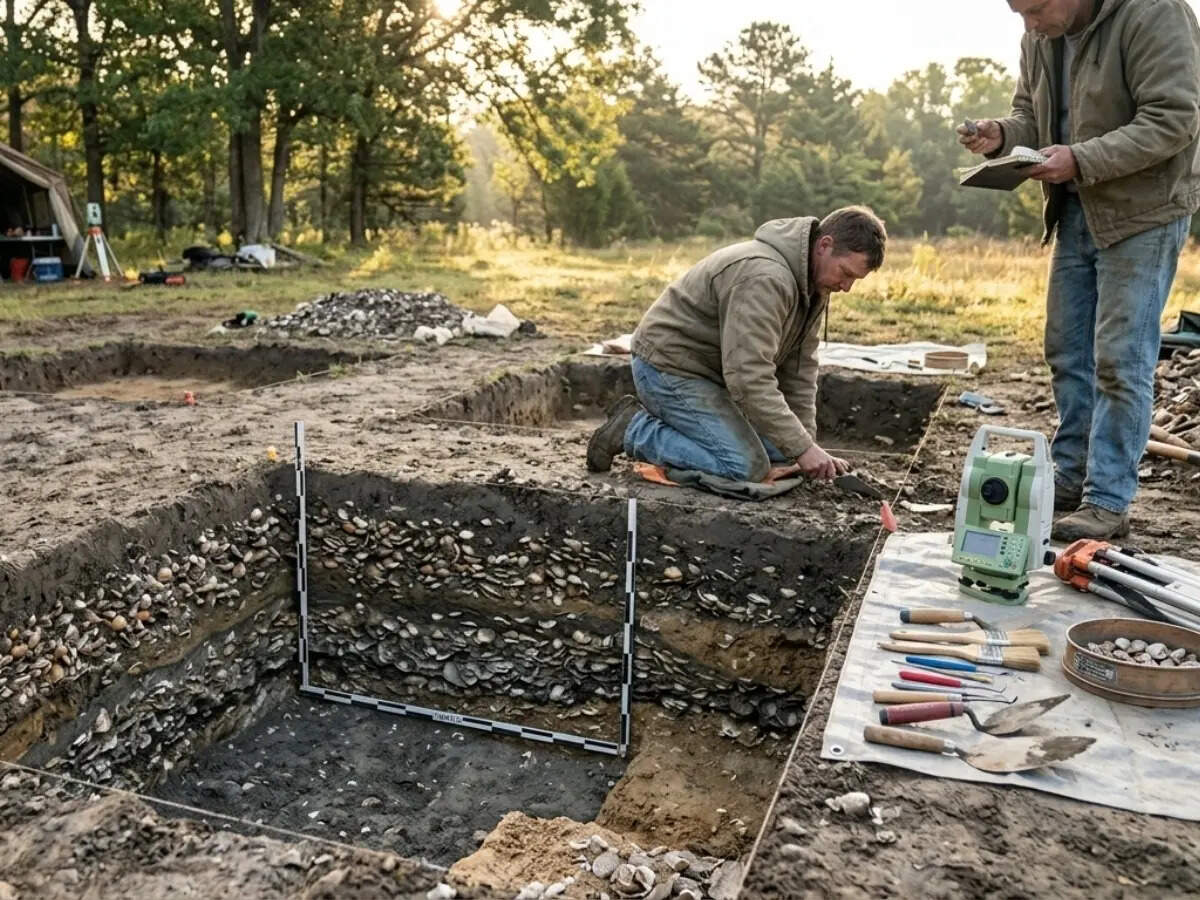
Simple dig near a shell midden uncovered a strange coin. Image credit – Gemini
Meaning of the Maine Penny’s discoveryThere are different explanations for the finding of the coin. First, the coin could have been transported to Maine through indirect trading. Sometimes objects can travel vast distances before ending up with their final owners.Second, it may have come into contact with native populations via Viking expeditions. Third, the movement of the coin could be explained by the disturbance of the burial location where it was located, especially considering that the artefact has not been excavated.It should be noted that the artefact alone cannot provide a definite historical narrative. Indeed, archaeologists emphasise that interpretations are highly dependent on context, and single findings need to be studied carefully.Why are shell middens a problem for this narrative?Shell middens are complex sites full of valuable artefacts that might also confuse their dating. While shell middens can protect artefacts for decades, the layers of material inside can make it hard to establish when and under what circumstances certain artefacts appeared in them.The University of Maine points out that these sites are endangered and need a proper archaeological investigation in order to shed light on the content that they contain. The absence of controlled excavations complicates the history of the discovery of the Maine Penny even further.Nevertheless, the link between the artefact and a midden is important, as it clearly states where the artefact originated.Maine Penny is connecting two worldsOne is represented by the ancient history of Indigenous people on the territory of Maine. Another one is the wider history of North America, shaped by Norse discoveries.Even though the coin itself cannot provide information about any settlements of Vikings in Maine, it sheds light on the complexity of transatlantic relations at the time.Even one solitary item could reveal much about transportation, trading, and communication over extensive regions.Why the discovery remains significantThe Maine penny’s significance is tied to its dual role as both a historical item and an enigma. It is a legitimate artefact with a known history, yet the details regarding its journey to the United States remain shrouded in mystery.This duality is what makes the discovery interesting since it reveals how historical evidence provides pieces of information that can be used to create theories and guide further research.For American audiences, the discovery opens up new possibilities when it comes to the timeline of transatlantic contact. This way, it helps broaden the scope of the topic without being too presumptuous.Ultimately, the Maine penny does not represent a significant Viking discovery or valuable historical item. Instead, it exemplifies how one small item could hold a wealth of unanswered questions.